Perfume retail · Qatar · Instagram
Making premium feel premium. Even when marketing has limits.
Paris Avenue already had the fragrances. The challenge was making its digital presence feel just as premium — while navigating the practical limitations of marketing in Qatar.
First, the number. Then the long story.
Roughly 4.1K followers when the work began; 18.3K on the profile now. That's about 14,200 more people — around four and a half times the audience it started with. Organic content and paid profile-visit campaigns both had a hand in it, and I can't tell you how the credit splits between them.
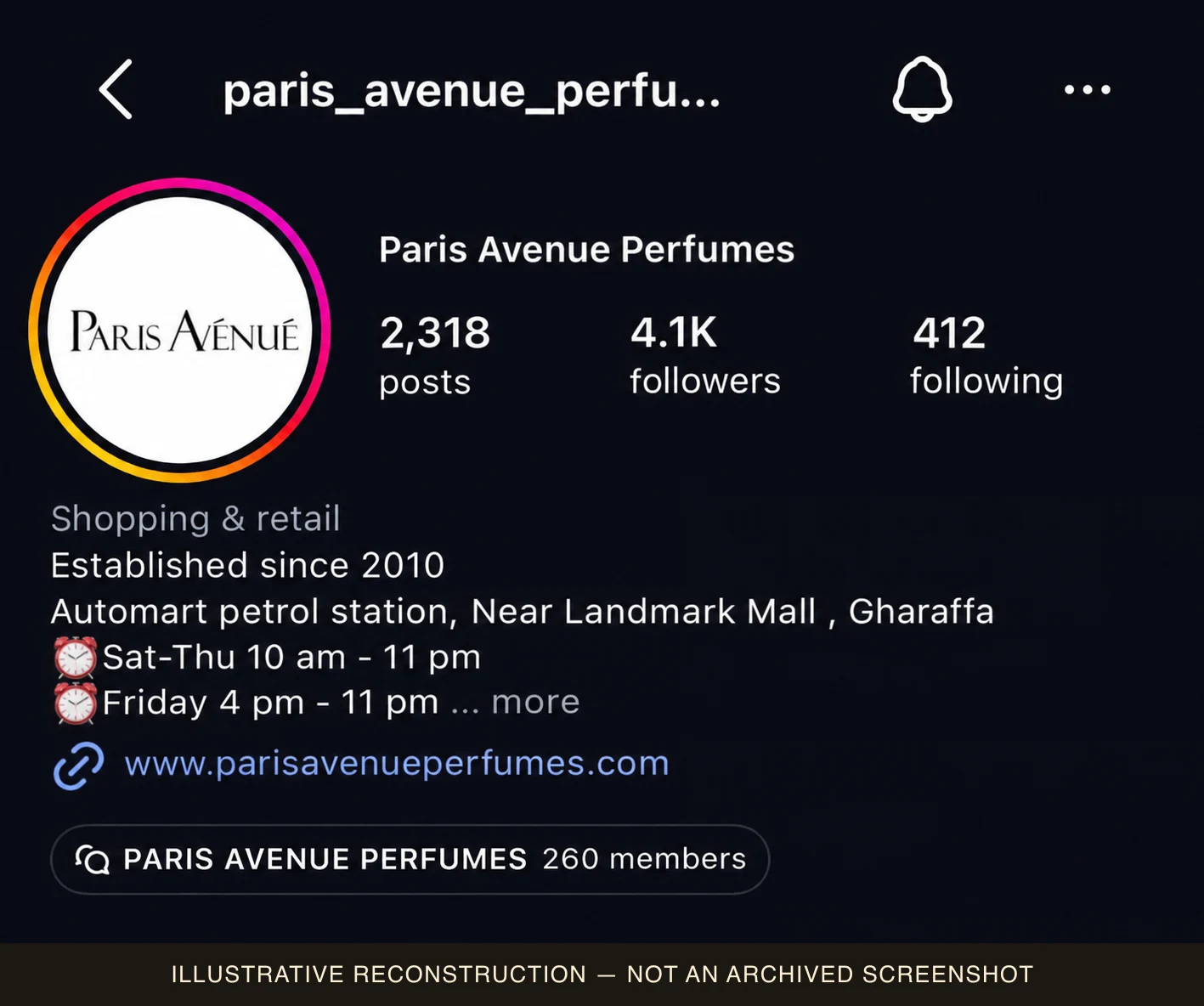
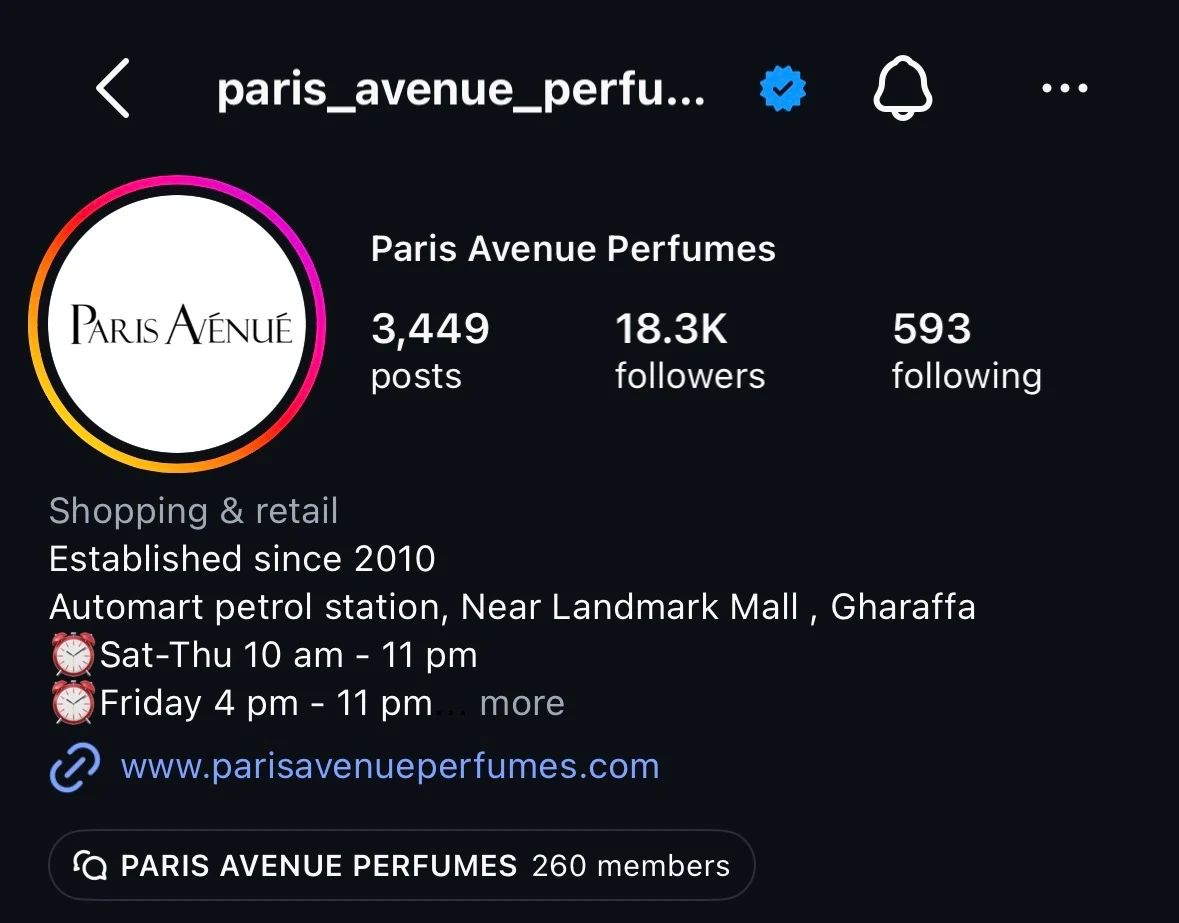
About +14,200 followers, roughly +346%, or 4.46× the starting audience. All approximate — Instagram rounds both counts. The before image is not an archived screenshot, so it isn't independent proof of the starting figure; that part rests on my own account of where the page stood. Neither image carries a date, and I'm not putting a start or end date on this growth.
നല്ല product മാത്രം പോരാ. അത് കാണുമ്പോഴും ആ feel വരണം.A good product isn't enough. It has to feel that way when you look at it, too.
- Client
- Paris Avenue Perfumes, Qatar
- Category
- Perfume retail
- Working relationship
- More than two years, ongoing
- Instagram followers
- About 4.1K → 18.3K
Good perfume, undersold by its own feed
Paris Avenue Perfumes is an established perfume retailer in Qatar — its own profile says “Established since 2010” — carrying fragrances from recognised houses. Nothing was wrong with what was on the shelves.
The concern that kept coming up in client discussions was simpler and more annoying: the social media presence didn't communicate how good the products actually were. A bottle that deserves a slow look was getting a quick one. The products were premium. The way they showed up online wasn't quite.
So this was never really a follower project. It was a perception project — make the feed feel like the shop — with audience growth as the thing that should follow if we got that right.
The usual levers weren't all available
There was a second problem, and it shaped everything after it. The client described practical limits on what could be done: restrictions affecting promotional execution, influencer collaborations, offline advertising and a few other approaches we'd normally reach for.
I'm describing those as the client described them to us — operational and regulatory constraints specific to this project. This isn't a summary of Qatari advertising law and I'm not qualified to write one.
What it meant in practice: we couldn't just turn everything on. The feed and the inbox had to do more of the work, and every idea got one extra question before it went anywhere — can this actually run here?
The product was premium. The feed needed to say it.
The first priority was presentation. We explored more polished, product-led visuals — premium compositions, campaign concepts and a consistent treatment, so the grid would read as one brand instead of a pile of separate posts.
Eight fragrances, eight small worlds
Each campaign takes a full row of the Instagram grid: a line on the left, the bottle in the middle, the fragrance and its house on the right. Three posts that read as one picture. These are cut straight from the feed screenshots below — nothing redrawn.
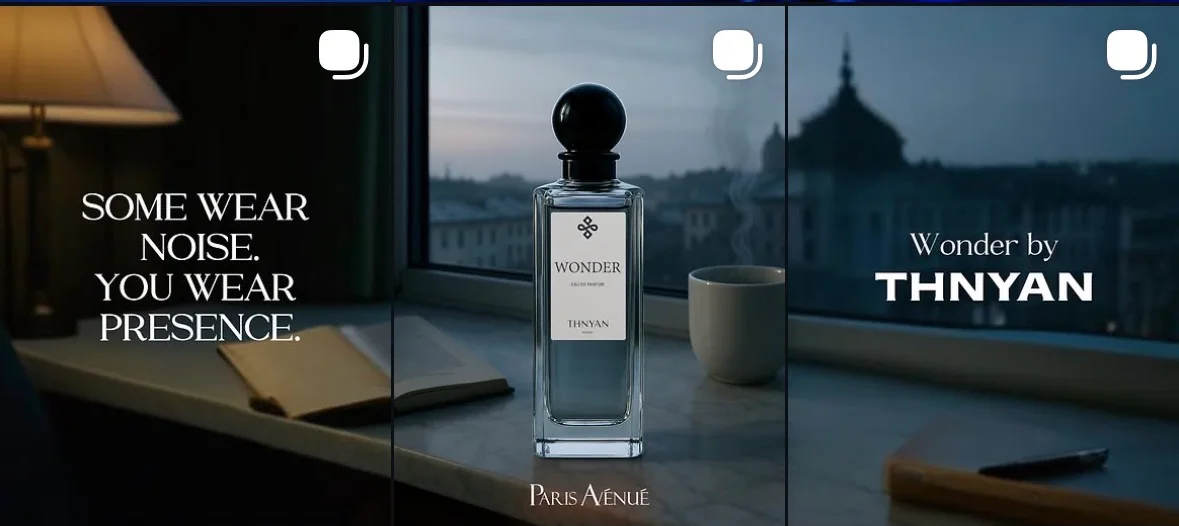
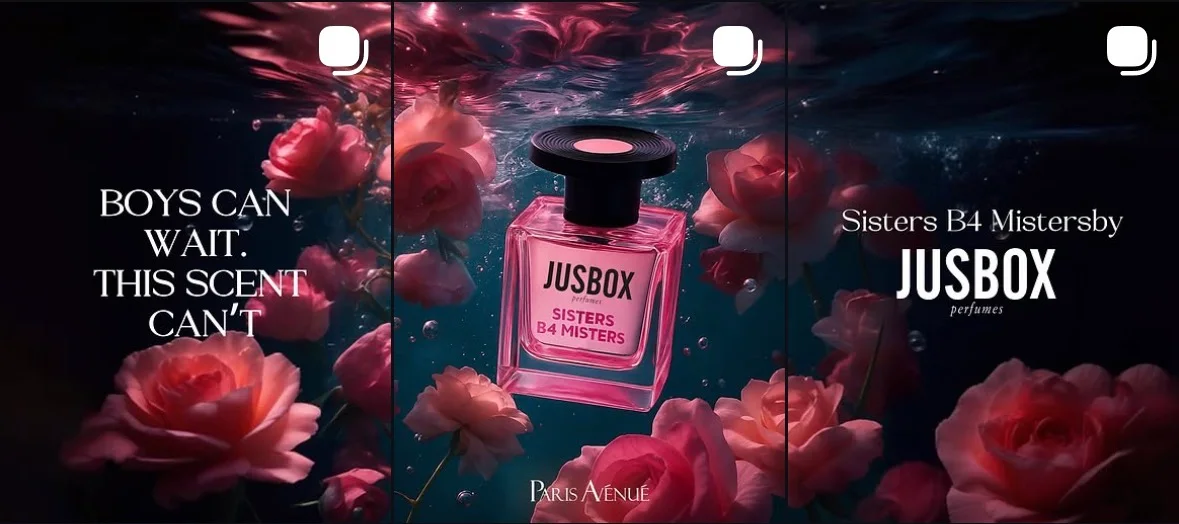
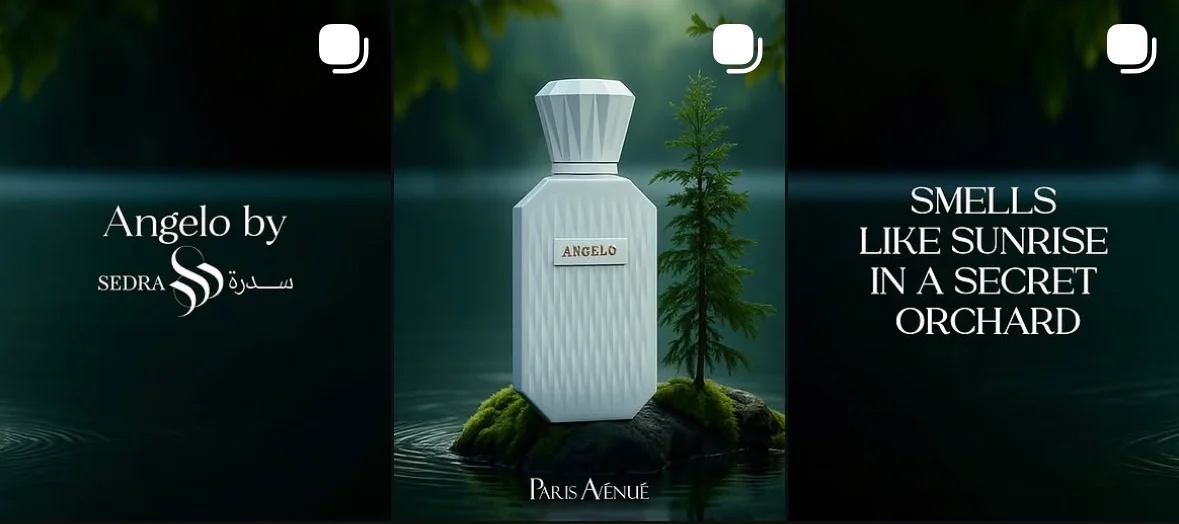
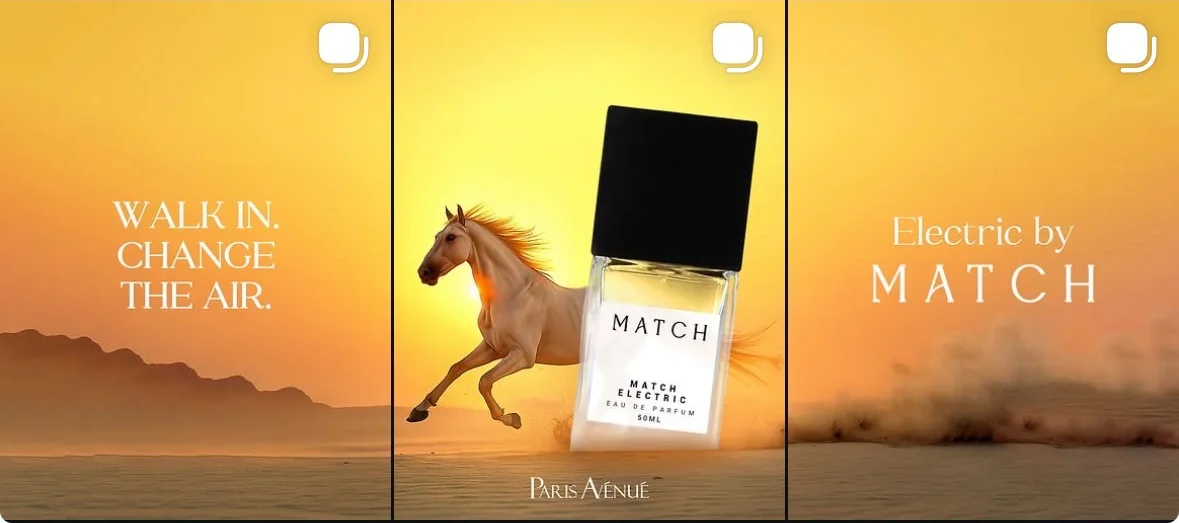
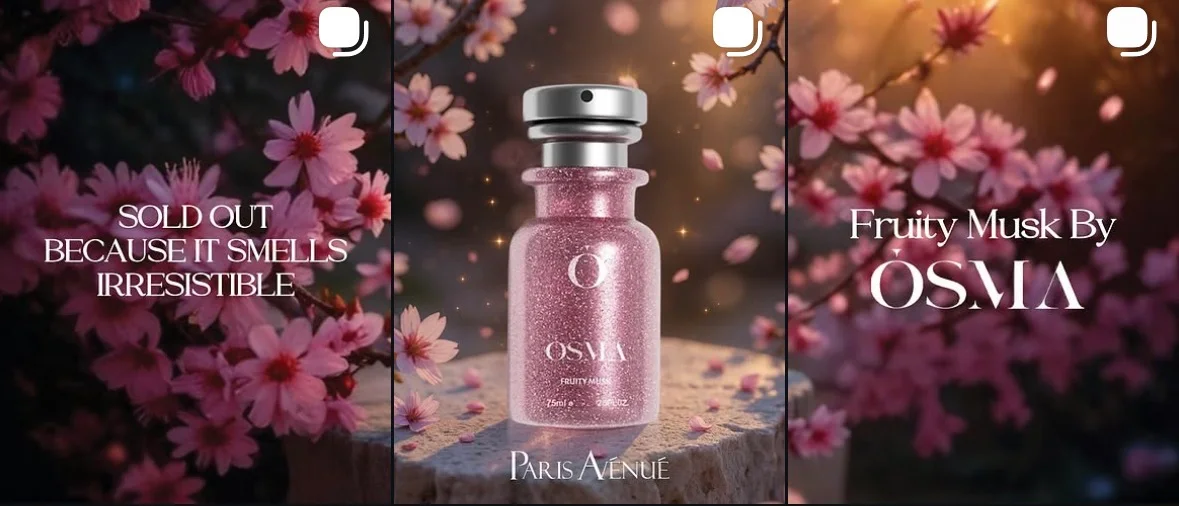
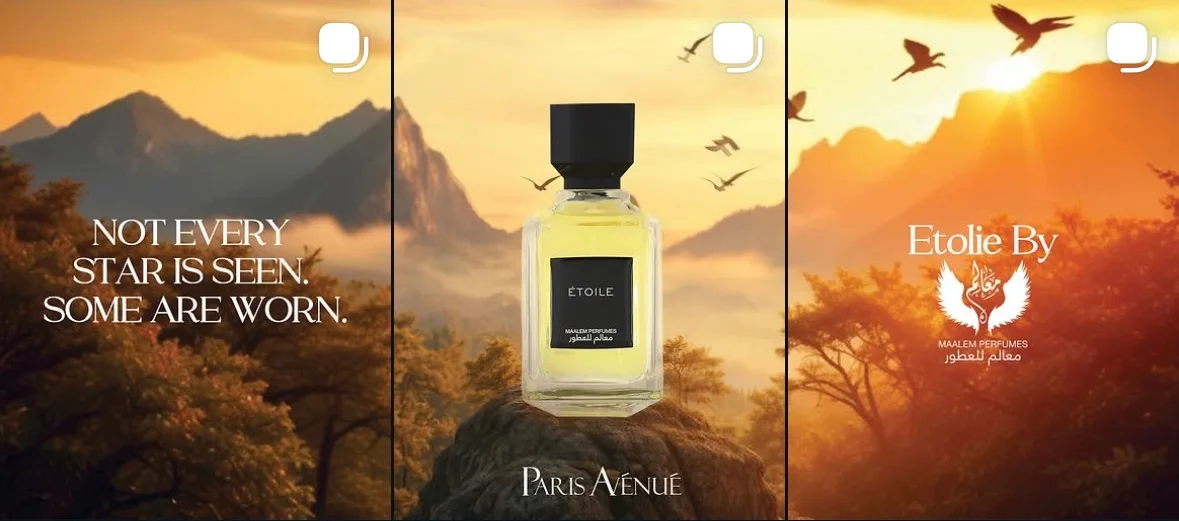
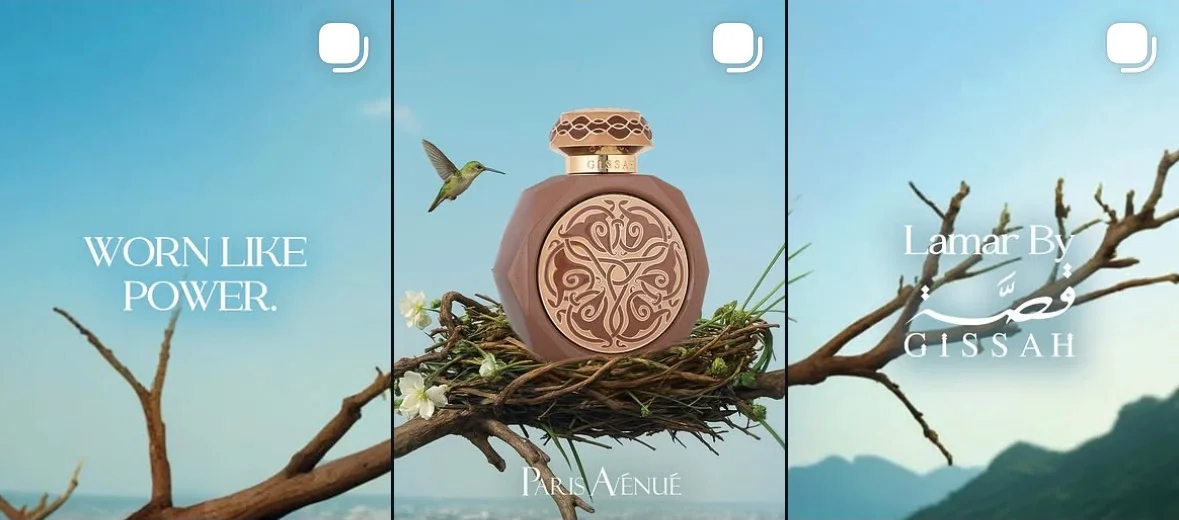
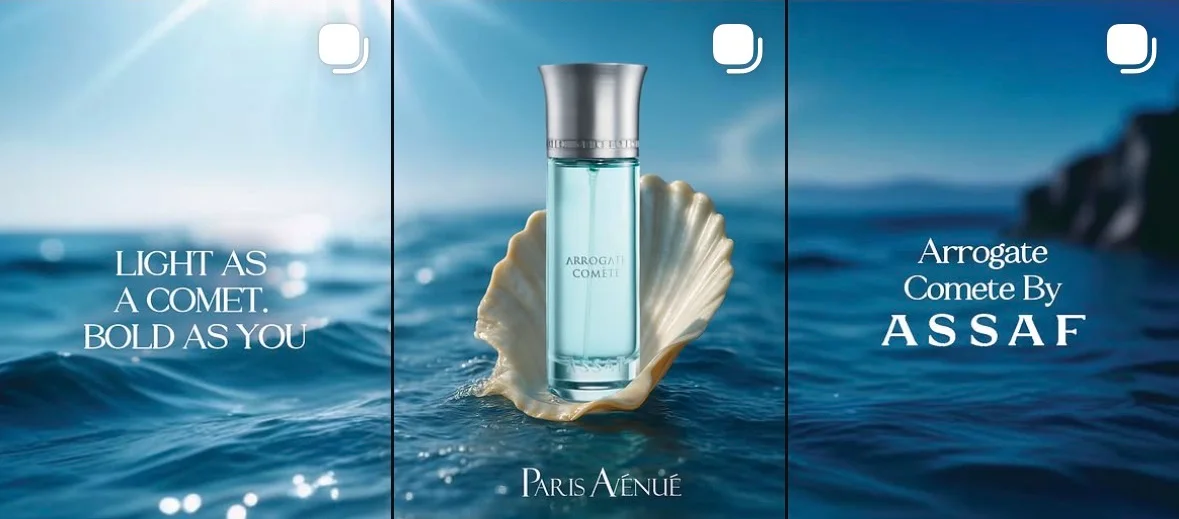
The lines in quotation marks are the exact wording on the creatives. Different colour, different setting, different mood for each fragrance — held together by the same type treatment and the Paris Avénue mark under every bottle.
The thinking was that premium is mostly restraint. One bottle, one idea, room to breathe. A perfume can't be smelled through a phone, so the picture has to do the job the scent can't — give you the feeling before you've read a single note.
How it sits on the feed
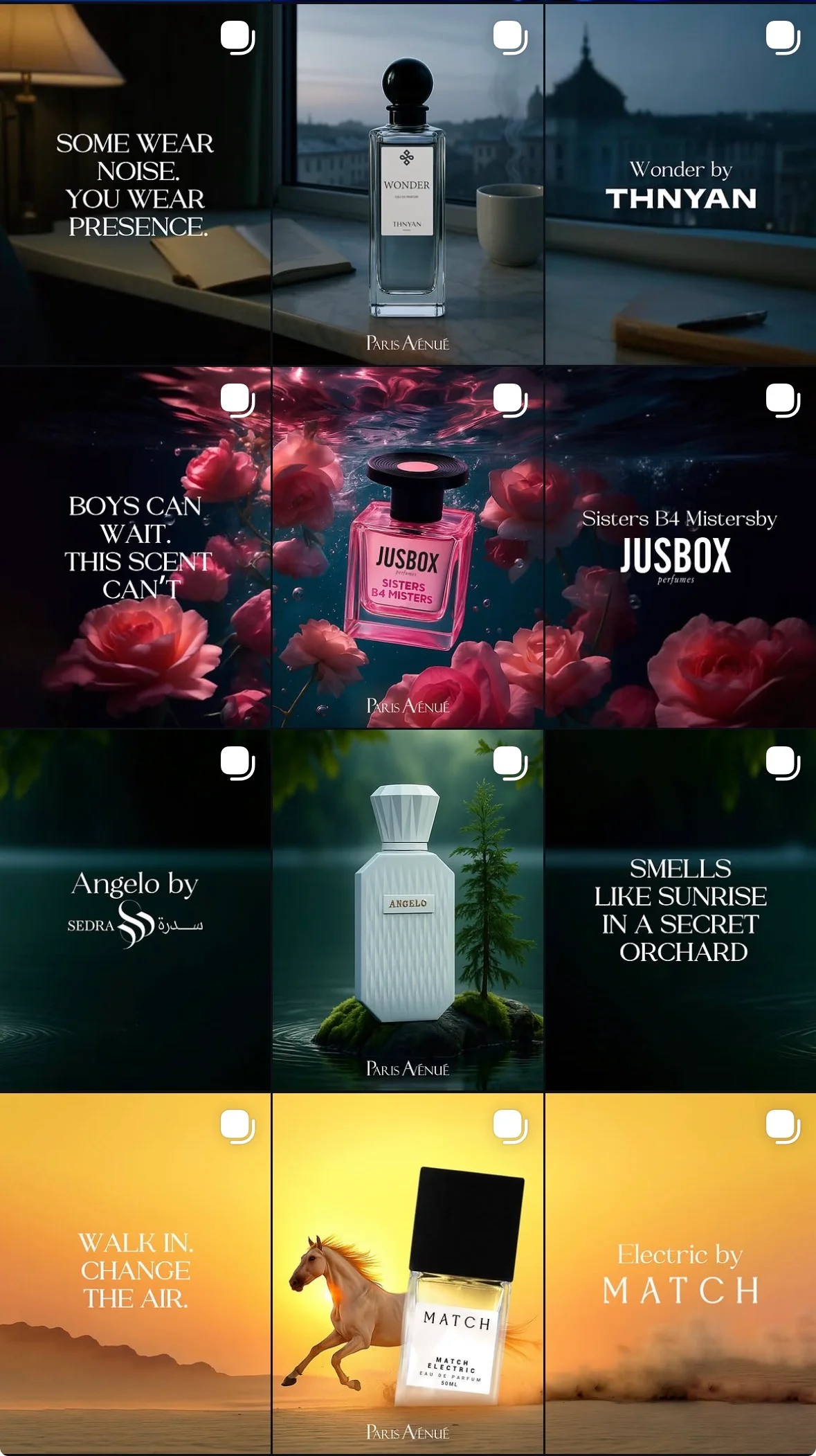
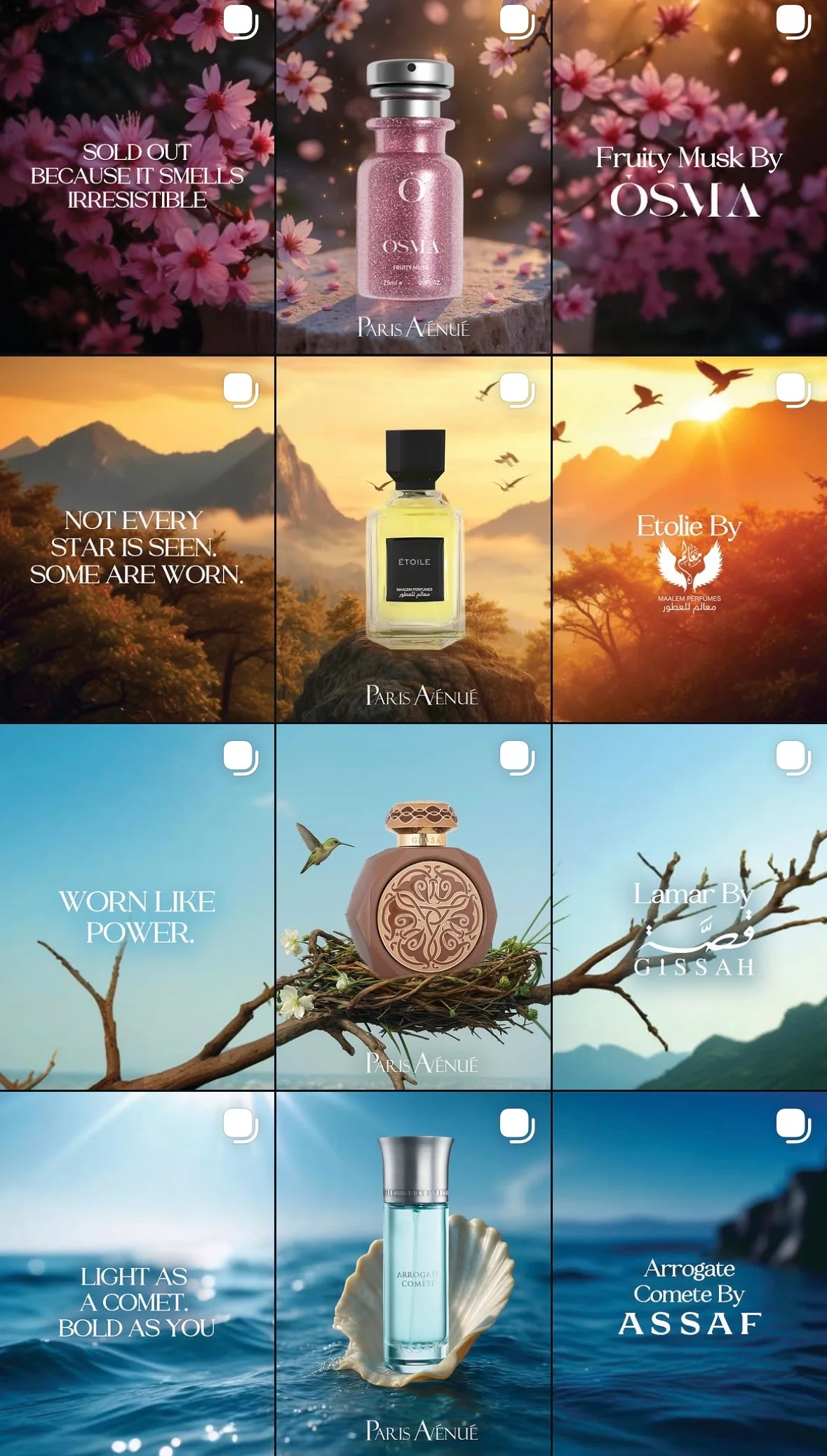
The two original grid screenshots, uncropped. My part here was the direction — what premium should look like for this shop, and holding it consistent. I didn't personally design every creative; production was team work.
Giving people a reason to swipe
A standard product post — bottle, name, price — wasn't travelling far organically. So we tried other shapes for the same story, carousels in particular. Every tile in those grids carries the carousel mark: the picture stops you, the swipe tells you more.
The aim was to make product storytelling more interesting to sit with, so people spent longer with a fragrance instead of scrolling past its photo.
Did it work? Some of it, yes — some content did better than what came before. Not all of it, and not consistently enough to grow the page on organic posting alone. This was trial and adjustment, not a controlled experiment, so there's no tidy A/B result to show and I'm not going to manufacture one.
The feed built the feeling. Stories started conversations.
This is the part I'd keep if I had to throw the rest away. The feed made people like the shop. Stories gave them something to reply to.
What went into Stories, regularly
New arrivals
What had just landed in the shop.
Availability
What was in stock right now — and what was back.
Fragrance highlights
One perfume at a time, pulled out for a closer look.
Product information
The practical details people ask about before they buy.
Promotional updates
Offers and timely announcements.
How to buy
Purchase-related information, so the next step was obvious.
None of that is glamorous. It's a shop telling you what's on the shelf today. But it's exactly the kind of update someone answers — “is this available?”, “how much?” — and those Story replies and messages became a steady stream of direct customer enquiries.
Feed കണ്ട് ഇഷ്ടം തോന്നും. Story കണ്ട് message അയക്കും.The feed makes them like it. The Story makes them message.
When organic reach slowed, we changed the route
Organic reach had a ceiling, so we recommended profile-visit campaigns. Nothing exotic: take content that already existed and already looked right, and use it as the ad, pointed at people likely to care about fragrance.
The logic was to send people to the profile rather than to a single post. If the feed had been rebuilt to make a first impression, the best use of paid was to get more of the right people standing in front of it.
That became part of how the audience grew. Part — I can't split the new followers between paid and organic, and I won't guess. There are no budgets, cost-per-visit or cost-per-follower figures here either, because I don't have verified ones to share.
The blue tick, for what it's worth
Getting the account verified was another initiative inside the same effort. You can see the badge next to the handle in the profile screenshot at the top of this page.
It belongs in the same family as everything else here: making the page look like the established retailer the shop already is. I'm not claiming the badge added a follower or sold a bottle. It's one more signal that you've found the real account.
What we suggested, and what the client ran
Worth keeping these two apart, because they aren't the same thing.
Recommended by us
Influencer collaborations and other promotional opportunities came up in our discussions as ways to widen the audience, within what was workable locally.
Run by the client
The client pursued collaborations with influencers appropriate to local requirements. That was their execution, not mine — I didn't manage those relationships.
Explored, not promised
We also explored AI-assisted video concepts as a possible creative direction. A suggestion is not a published campaign, and I'm not claiming every concept went live.
Offline
Offline promotion was discussed too. I have no evidence of an offline campaign to show, so I'm not saying one ran.
The receipts
Every screenshot I was given, as it is. Each one is its own snapshot with its own period — nothing in this section is added to anything else.
What the content did
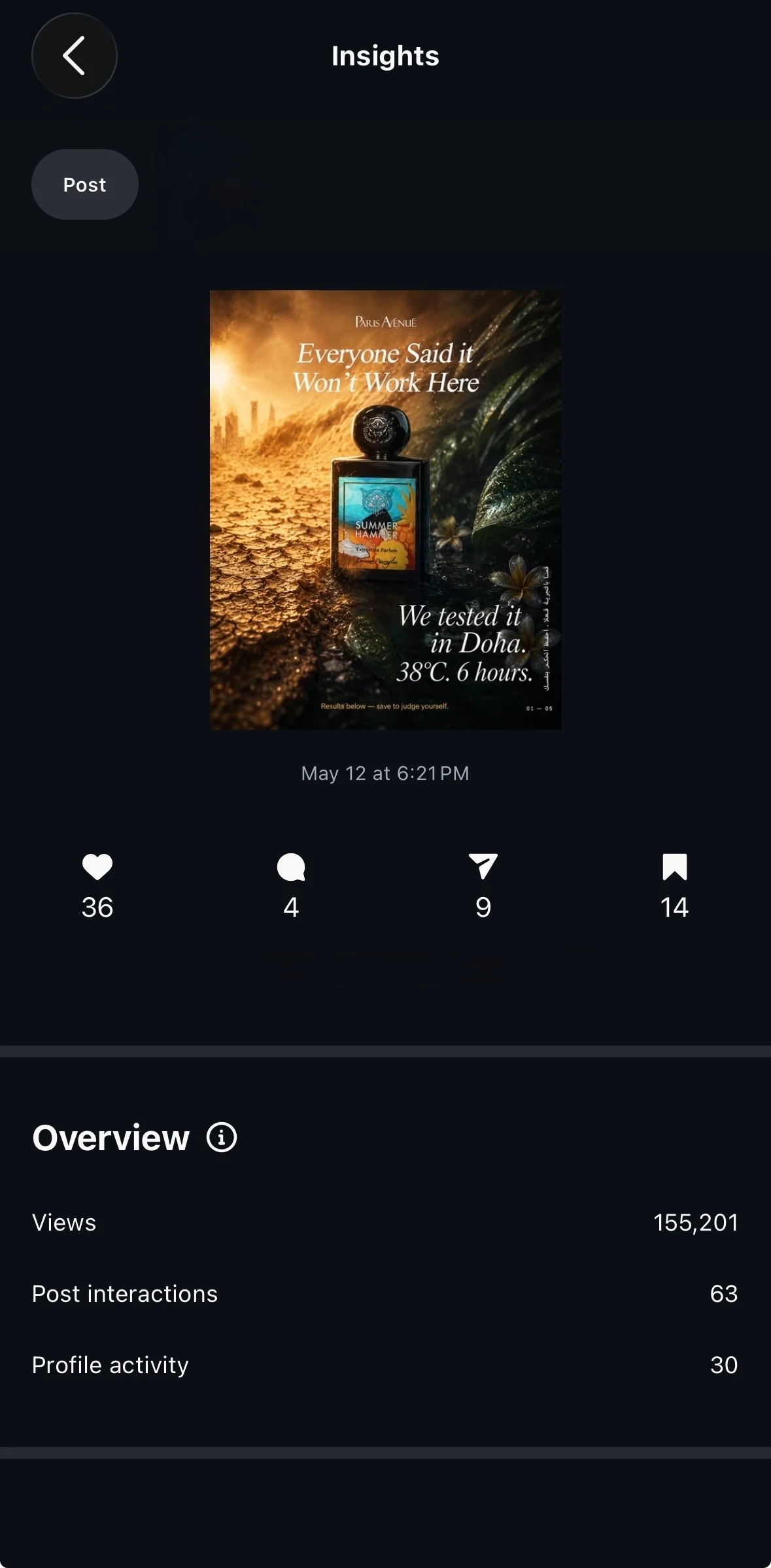
“We tested it in Doha. 38°C. 6 hours.”
One post — a fragrance put through a Doha heat test, with the creative marked 01–05. Posted May 12 (the screenshot doesn't show the year).
- 155,201
- Views
- 63
- Post interactions
- 30
- Profile activity
- 36
- Likes
- 4
- Comments
- 9
- Shares
- 14
- Saves
Instagram post insights
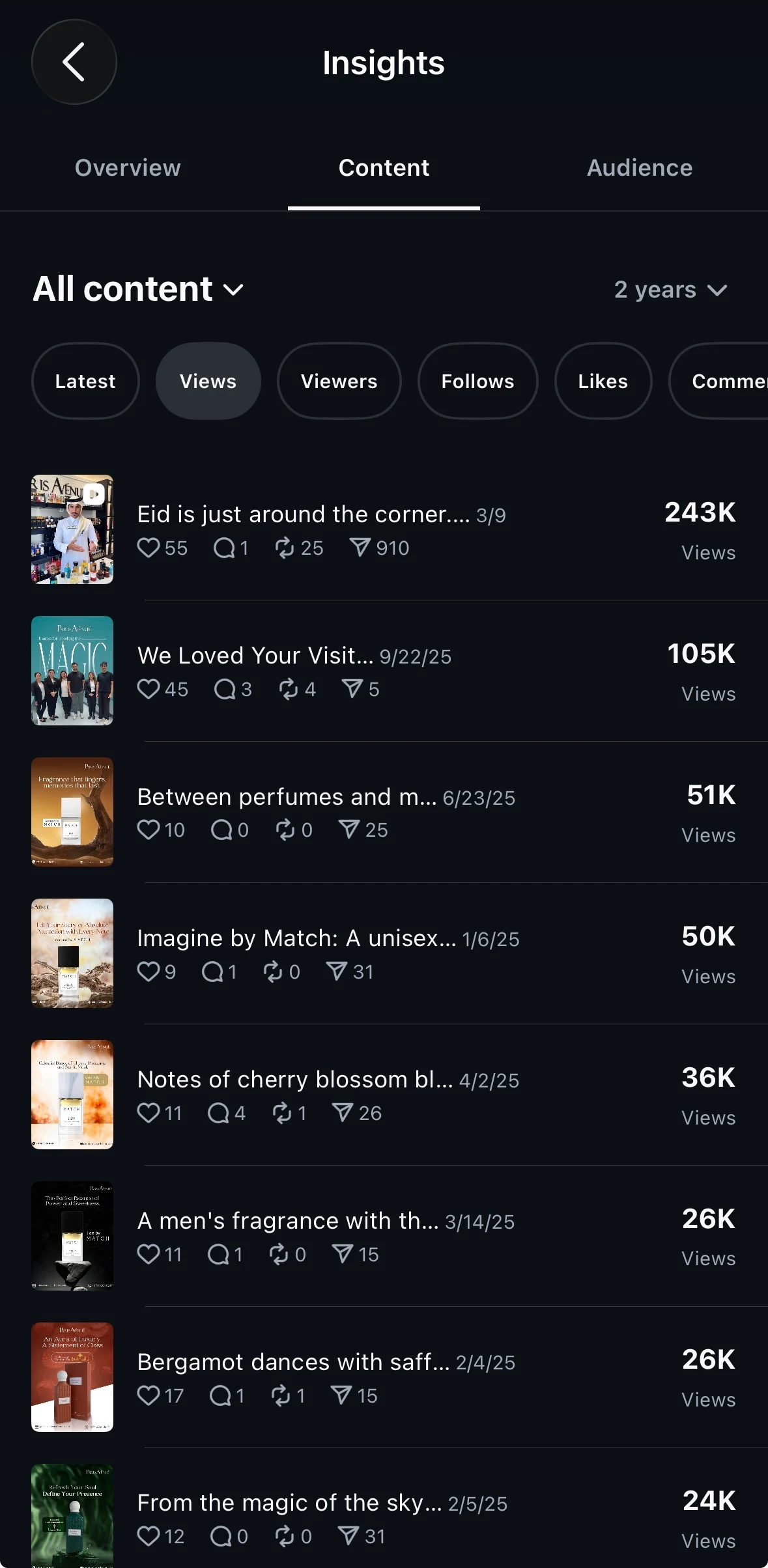
Top content by views — first screen
Then, further down the same screen: 36K, 26K, 26K and 24K.
- 243K
- “Eid is just around the corner…” · 3/9
- 105K
- “We Loved Your Visit” · 9/22/25
- 51K
- “Between perfumes and m…” · 6/23/25
- 50K
- “Imagine by Match…” · 1/6/25
Instagram insights · All content · sorted by views · “2 years” range
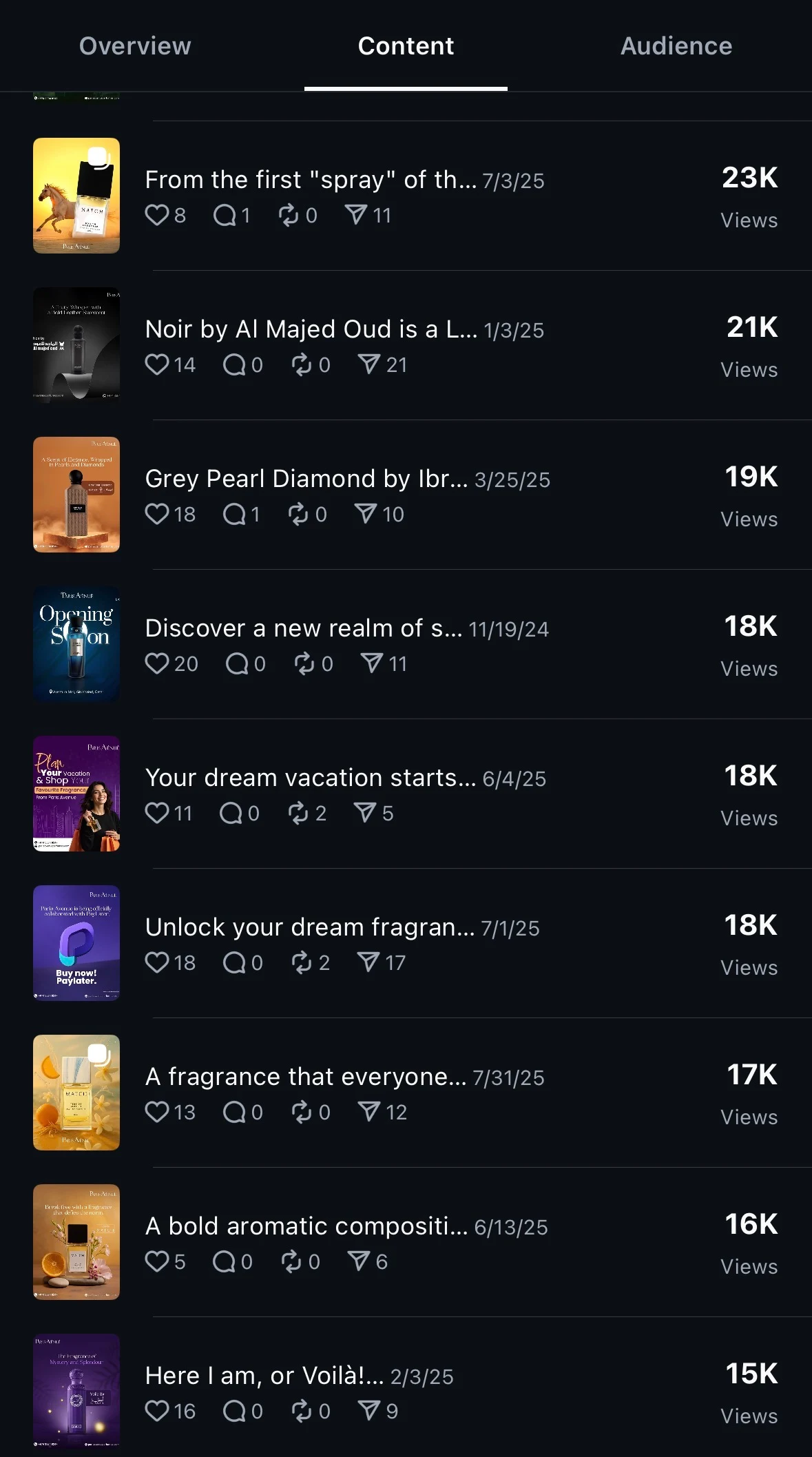
Top content by views — second screen
The list continues: 23K, 21K, 19K, 18K, 18K, 18K, 17K, 16K and 15K views, on posts dated between 11/19/24 and 7/31/25.
Instagram insights · same list, scrolled
Read these carefully. The Doha post is a single result, not an average, and the screenshot doesn't separate organic from paid views — so I'm not calling them organic. The two lists are the top of a views-sorted table: the best performers, by definition, not a typical post. They're individual post totals; I haven't added them up, because views aren't unique people and the sum would mean nothing. No engagement rate is calculated anywhere on this page.
Real conversations, beyond the feed
Three Meta Business Suite messaging reports, all filtered to Instagram. They are three separate snapshots and they stay separate.
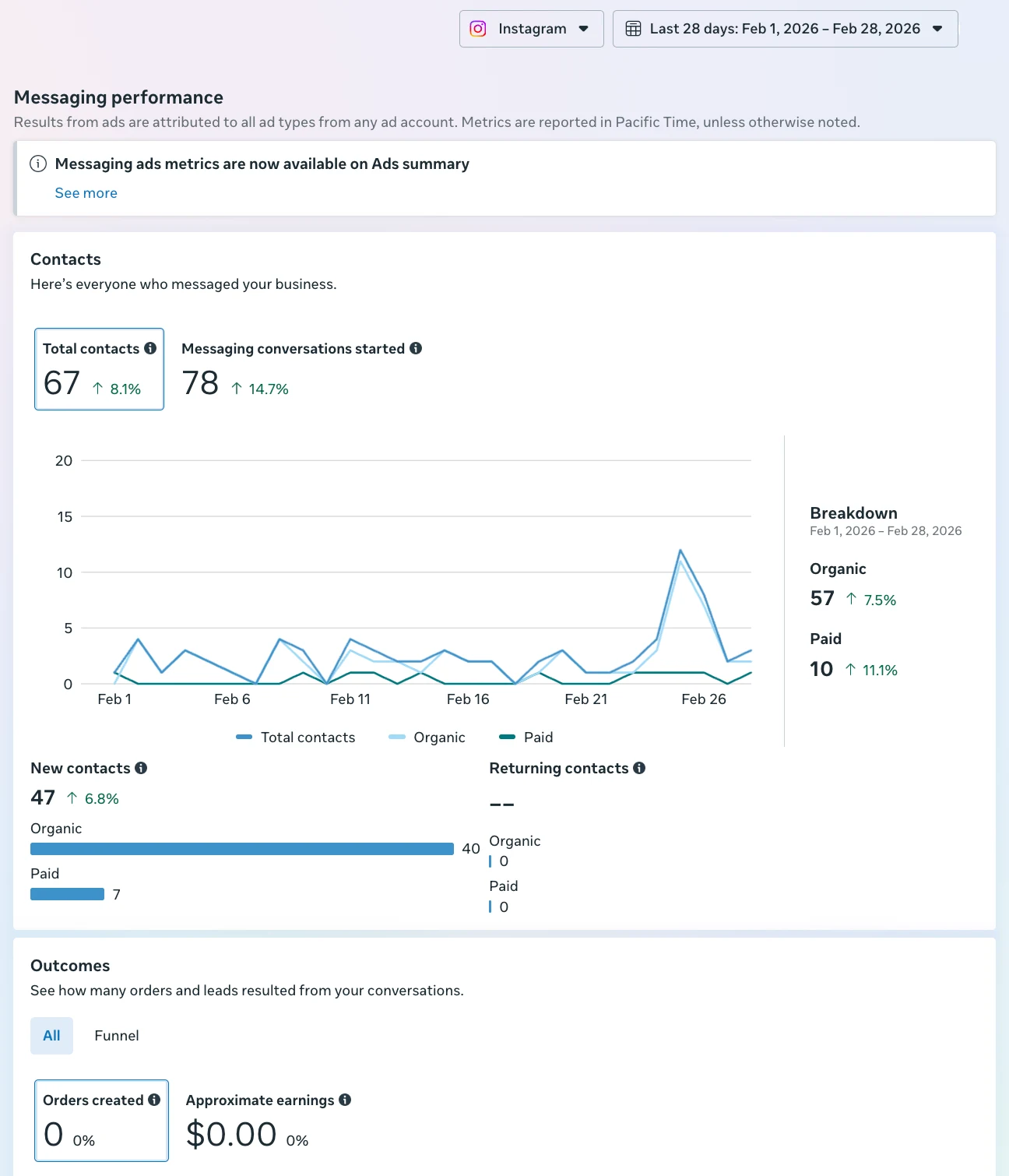
28 days · 1–28 Feb 2026
A 28-day window. It falls inside the 90-day period next to it, so the two overlap and can't be added.
- 67
- Total contacts
- 78
- Conversations started
- 57
- Organic contacts
- 10
- Paid contacts
Meta Business Suite · Messaging · Instagram
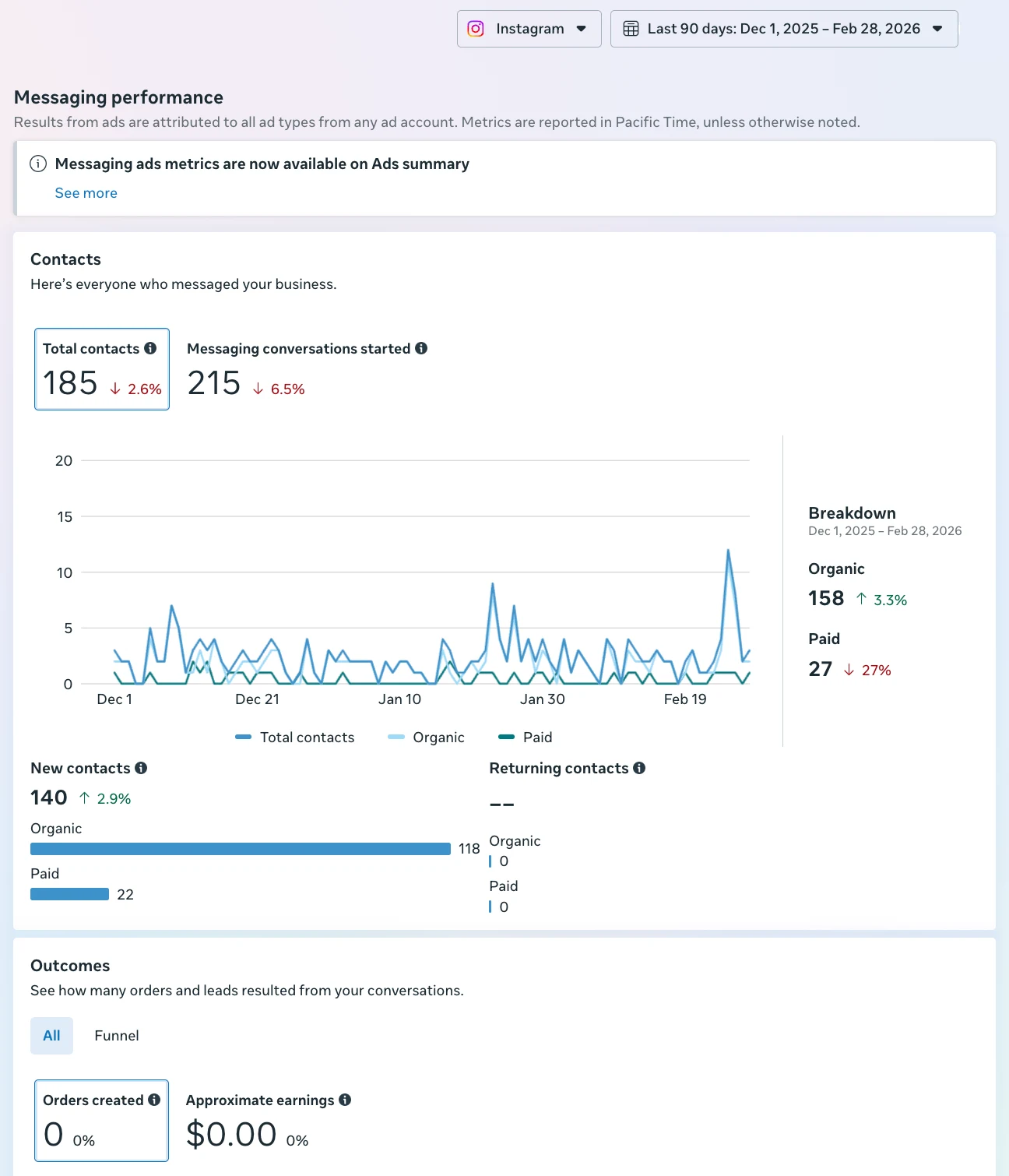
90 days · 1 Dec 2025 – 28 Feb 2026 · first view
Captured with the same account selected as the 28-day report.
- 185
- Total contacts
- 215
- Conversations started
- 158
- Organic contacts
- 27
- Paid contacts
Meta Business Suite · Messaging · Instagram
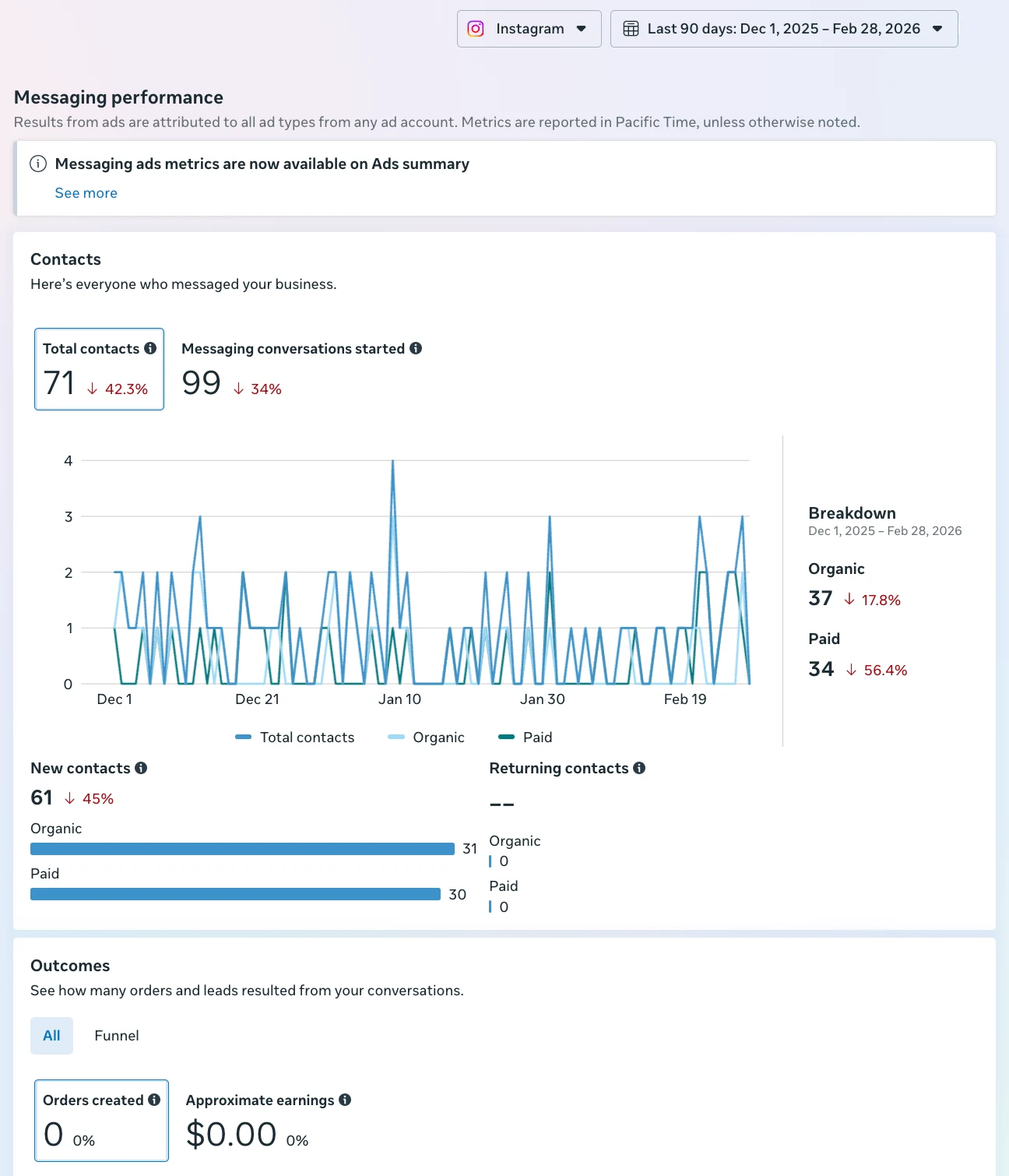
90 days · same dates · second view
Same dates, different totals — because a different account was selected in Business Suite when this one was taken.
- 71
- Total contacts
- 99
- Conversations started
- 37
- Organic contacts
- 34
- Paid contacts
Meta Business Suite · Messaging · Instagram
Why two reports for the same 90 days disagree: I checked the originals. Both are filtered to Instagram and were taken about a minute apart, but the account icon in the Business Suite sidebar is different in each — so they are two account views, not one report contradicting itself. The screenshots don't name the accounts, so I'm not naming them either, and I'm not adding 185 and 71 together.
The best result wasn't just the follower count
Beyond the numbers, this became an ongoing working relationship — built through regular discussions, creative experimentation, and adapting the strategy as the brand evolved.
The client has kept working with our team for more than two years. We've met online and in person to go through direction, performance and what to change next. They've told us they're happy with the work, and that sales have come through the social activity.
That's my account of it, not a quotation — there's no testimonial on this page because I haven't asked for one to publish, and I'd rather leave the space empty than write one for them. But two years of someone choosing to stay is its own kind of evidence.
Who did what
What was mine
- Social media strategy
- Premium content direction
- Creative experimentation and content-format recommendations
- The Instagram Stories approach
- Profile-visit campaign strategy
- The account verification initiative
- Influencer-collaboration and AI-video concept recommendations
- Client discussions and ongoing strategic improvements
What wasn’t
- Designing every creative — production was team work
- Running every campaign single-handedly
- Influencer collaborations — pursued and run by the client
- Closing sales — that happened at the shop and in its inbox
- The whole of the follower growth — organic work, paid campaigns and the client's own activity all fed it
A collaborative client project. Where I can't say exactly who executed something, I've written “we” on purpose.
The honest bit
What it taught me
Constraints are underrated. When you can't pull every lever, you find out which ones actually matter — and here it came down to three jobs. The feed earns the feeling. Stories start the conversation. Paid brings new people to the door. Each one is weaker on its own. I also learned that “premium” is mostly restraint: fewer things, said more carefully. And that a follower count is a nice thing to screenshot, but a client who is still in the room two years later is telling you something a dashboard can't.
Where this came from
Built from my own account of the engagement and ten supplied screenshots, all of which appear on this page. The before profile image is an illustrative reconstruction and is labelled as one, including inside the image. The Meta messaging screenshots were cropped to the report panel and the logged-in user's profile picture was covered; no figure was changed. Campaign strips are crops of the two feed-grid screenshots, which are also shown whole.
Still open
- An archived screenshot, or any dated record, of the starting follower count.
- When the work began and when the 18.3K capture was taken — no dates are stated for the growth.
- Which account each of the two 90-day messaging reports belongs to.
- How follower growth splits between organic content and paid profile-visit campaigns, and any ad spend figures.
- Sales or revenue linked to social activity, if the client is able to share it.
- Story screenshots or reply examples — none were in the supplied material.
- The year of the “May 12” Doha post, and whether its views included paid distribution.
- Evidence of the client-run influencer collaborations, and whether any AI-video concept was published.
- The client's permission to display this work publicly.